
Get Free PC Consultation
Talk to our experts and get the best PC solution for your needs and budget.
Your details are safe. No spam, ever.

Talk to our experts and get the best PC solution for your needs and budget.
Your details are safe. No spam, ever.
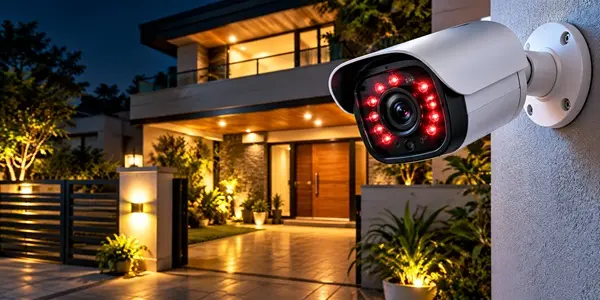
Your home should feel safe, whether it is daytime or midnight. But security risks do not disappear when the sun goes down. In fact, poor visibility at night can make it difficult to identify unexpected visitors, monitor outdoor areas, or notice suspicious activity around your property.
This is where night vision CCTV cameras become useful.
Unlike traditional cameras that depend heavily on visible light, night vision security cameras are designed to capture footage even in low-light or completely dark environments. They help homeowners monitor entrances, parking areas, gardens, balconies, and other important locations throughout the night.
Whether you are planning a new home security system or upgrading your existing CCTV setup, understanding night vision technology can help you make a better decision.
In this guide, we will explain how night vision CCTV cameras work, the different technologies available, their benefits, and what to consider before purchasing one.
A night vision CCTV camera is a surveillance camera designed to capture video in low-light conditions or darkness.
Regular cameras need sufficient lighting to produce clear images. When the surroundings become dark, their footage may become grainy, blurry, or almost completely black.
Night vision cameras solve this problem by using specialised sensors and lighting technologies.
Depending on the camera model, they can use:
Infrared (IR) illumination.
Colour night vision technology.
Starlight image sensors.
Low-light image enhancement.
These technologies help cameras capture useful footage even when natural lighting is limited.
For example, if someone approaches your front door late at night, a night vision camera can help record their movement even when the surrounding area is poorly lit.
Night vision CCTV cameras use different technologies to capture images when there is not enough visible light.
Let’s understand the most common types.
Infrared night vision is one of the most widely used technologies in CCTV cameras.
These cameras use infrared LEDs to illuminate an area with infrared light. This light is generally invisible to the human eye but can be detected by compatible camera sensors.
When the environment becomes dark, the camera switches to night mode and uses infrared illumination to capture footage.
Most traditional IR cameras display night footage in black and white.
Benefits of IR night vision:
Works in very low-light conditions.
Can operate in complete darkness within its effective range.
Does not require visible lighting.
Useful for outdoor surveillance.
Provides consistent night monitoring.
IR night vision is particularly useful for monitoring entrances, corridors, parking spaces, and building boundaries.
Traditional infrared cameras generally capture black-and-white footage at night.
Colour night vision cameras are designed to capture colour images in low-light environments.
They use sensitive image sensors, advanced image processing, and sometimes built-in white-light LEDs to produce colour footage.
Depending on the technology, some models can capture colour images using available ambient light, while others use additional illumination when the surroundings become dark.
Benefits of colour night vision:
Helps identify clothing colours.
Provides more visual details.
Can make objects easier to recognise.
Useful for monitoring entrances and outdoor areas.
Helps provide additional context during security incidents.
For example, colour footage may help distinguish between a person wearing a red jacket and another wearing a dark jacket.
Starlight technology is designed to capture clearer images in extremely low-light conditions.
These cameras use highly sensitive image sensors to make better use of available ambient light, such as streetlights, moonlight, or nearby outdoor lighting.
Unlike traditional IR cameras, some starlight cameras can maintain colour footage in very low-light environments.
However, their performance depends on the available light, sensor quality, lens aperture, and camera processing capabilities.
Benefits of starlight technology:
Better performance in low-light environments.
Improved image details.
Colour recording in suitable lighting conditions.
Useful for residential and commercial surveillance.
Choosing between infrared and colour night vision depends on where you plan to install the camera.
Here is a simple comparison:
| Feature | IR Night Vision | Colour Night Vision |
|---|---|---|
| Night footage | Usually black and white | Colour |
| Complete darkness | Yes, within IR range | Depends on illumination |
| Visible lighting required | No | Depends on model |
| Colour identification | Not available | Available |
| Power consumption | Depends on IR LEDs | May be higher with active lighting |
| Best use | Dark outdoor areas | Entrances and well-lit areas |
Which one should you choose?
Choose IR night vision if you need reliable monitoring in areas with little or no light.
Choose colour night vision if identifying clothing colours, vehicles, and other visual details is important.
For many homes, a camera offering both IR and colour night vision modes provides greater flexibility.
A night vision camera does more than record video in the dark. It can become an important part of your overall home security system.
Here are some practical ways it helps.
Your front door is one of the most important areas to monitor.
A night vision CCTV camera can record people approaching your entrance, visitors arriving late at night, and unexpected movement near your door.
This can be particularly useful when you are travelling or away from home.
Cars and motorcycles parked outside can be vulnerable to theft, vandalism, and accidental damage.
Installing a night vision camera near your parking area helps you monitor vehicle movement and activity around your property.
For better results, select a camera with a suitable viewing angle and enough night vision range to cover the entire parking space.
Large gardens, balconies, terraces, and building boundaries can have dark corners where visibility is limited.
Outdoor night vision cameras help monitor these areas without requiring powerful visible lights throughout the night.
Weather-resistant cameras are important for outdoor installations.
Many modern CCTV cameras support remote monitoring through mobile applications.
This allows you to check live footage and review recorded videos when you are away from home, provided the camera and network connection are configured correctly.
During festivals, holidays, or family trips, remote surveillance can provide additional peace of mind.
A camera with night vision can capture activity that might otherwise go unnoticed.
Depending on the model, features such as motion detection, human detection, and event notifications can help alert you when activity occurs around monitored areas.
Remember that camera recording and alerts depend on proper installation, settings, storage, and network availability.
Not all night vision cameras provide the same image quality or functionality.
Before purchasing one, consider the following features.
Night vision range indicates how far the camera can illuminate or capture useful footage in darkness.
Common advertised ranges include 20 metres, 30 metres, and 50 metres, although actual performance depends on the camera, environment, lens, and installation.
Choose a range suitable for the area you want to monitor.
Resolution determines how much visual detail the camera can capture.
Common CCTV resolutions include:
2MP (1080p): Suitable for basic home monitoring.
4MP: Provides more detail than standard Full HD.
5MP: Useful for areas requiring additional image detail.
8MP (4K): Provides higher resolution for detailed surveillance.
Higher resolution can help with identification, but it also requires suitable storage capacity and network bandwidth.
If you are installing a CCTV camera outside, weather protection is important.
Look for an appropriate IP rating.
For example:
IP65: Provides protection against dust and water jets under specified test conditions.
IP66: Provides stronger protection against powerful water jets.
IP67: Provides protection against temporary immersion under specified test conditions.
Choose a camera according to the installation environment and manufacturer specifications.
Motion detection allows a camera to identify movement within its monitored area.
Some advanced models also offer human or vehicle detection to reduce unnecessary alerts.
This feature is useful for monitoring entrances, parking areas, and outdoor boundaries.
A CCTV camera needs a way to store recorded footage.
Common storage options include:
MicroSD cards.
DVR recording systems.
NVR recording systems.
Network-based storage.
Cloud storage, where supported.
Consider your recording requirements, available storage capacity, retention period, and backup options before purchasing.
Remote monitoring allows you to access live or recorded CCTV footage through a smartphone, tablet, or computer.
Before buying, check whether the camera supports a compatible mobile application and whether remote viewing requires an internet connection, cloud subscription, or additional configuration.
Camera placement is just as important as camera specifications.
Even an expensive CCTV camera may not provide useful footage if it is installed in the wrong location.
Here are some recommended locations for residential installations:
| Location | Why It Matters |
|---|---|
| Main entrance | Monitor visitors and unexpected activity |
| Parking area | Monitor cars and motorcycles |
| Backyard | Cover less visible outdoor areas |
| Building entrance | Record movement around access points |
| Balcony or terrace | Monitor accessible outdoor spaces |
| Garden boundary | Cover important perimeter areas |
Useful installation tips:
Install cameras at a height that balances coverage and identification detail.
Avoid pointing cameras directly towards bright lights.
Keep the lens free from dust, insects, and spider webs.
Avoid obstructions such as trees and walls.
Check night footage after installation.
Position cameras to reduce blind spots.
Also respect neighbours’ privacy and avoid recording areas where people have a reasonable expectation of privacy.
Sometimes a CCTV camera may not produce clear footage at night, even if its specifications look impressive.
Here are some common problems and possible solutions.
Possible reasons:
Dirty camera lens.
Incorrect night vision settings.
Insufficient infrared illumination.
Obstructions in front of the camera.
Solution: Clean the lens, check the night mode settings, and ensure the camera has a clear view of the monitored area.
This can happen when infrared light reflects from nearby walls, glass, dust, or spider webs.
Solution: Adjust the camera position, clean the lens cover, and avoid installing the camera too close to reflective surfaces.
Moving people or vehicles may appear blurry in night footage because of limited light and longer exposure times.
Solution: Improve the surrounding lighting, check the camera’s exposure settings, and choose a camera with suitable low-light performance.
Possible causes include incorrect camera settings, a faulty IR LED, power supply problems, or a malfunctioning day/night sensor.
Solution: Check the camera’s night mode settings, power connection, and manufacturer troubleshooting instructions.
If you want to monitor your property throughout the day and night, a night vision CCTV camera is a useful investment.
It is particularly beneficial for:
Independent houses.
Apartments and residential buildings.
Shops and retail stores.
Warehouses.
Office premises.
Parking areas.
Commercial properties.
However, the right camera depends on your security requirements.
A small apartment entrance may need only one well-positioned camera, while a larger property may require multiple cameras with different viewing angles and night vision ranges.
Instead of choosing a camera based only on price or advertised night vision distance, consider image quality, installation location, storage, connectivity, and overall reliability.
Regular maintenance helps keep your surveillance system working properly.
Follow these simple maintenance practices:
Clean the camera lens and protective cover regularly.
Check whether infrared LEDs are working correctly.
Inspect outdoor camera connections for damage.
Remove spider webs and dust around the camera.
Check recording storage and available space.
Test remote monitoring periodically.
Review recorded footage to confirm night image quality.
Keep camera firmware updated when supported.
A properly maintained camera is more likely to provide consistent surveillance performance.
Yes. Infrared CCTV cameras can record in complete darkness within their effective infrared illumination range. Colour night vision cameras may require some ambient light or built-in white-light illumination.
Some cameras can record colour footage at night using low-light sensors, starlight technology, or built-in white-light LEDs. Traditional infrared cameras generally record black-and-white footage in darkness.
The range depends on the camera model and its infrared or visible-light illumination system. Some models advertise ranges of 20, 30, or 50 metres or more. Actual identification quality may be lower than the advertised illumination distance.
Yes. Many CCTV cameras can record locally using a microSD card, DVR, or NVR without an internet connection. However, remote monitoring and internet-based notifications generally require network connectivity.
Infrared is useful for monitoring dark areas without visible illumination. Colour night vision provides additional visual information when sufficient light is available or when the camera uses white-light illumination. The best choice depends on your installation requirements.
Yes. Many modern CCTV cameras include motion detection, and some support human and vehicle detection. Their accuracy depends on camera quality, lighting, configuration, and the surrounding environment.
Yes, provided the camera is specifically designed for outdoor installation and has an appropriate weather-resistance rating. Always check its IP rating and manufacturer specifications.
Home security should not depend on daylight. Whether you are sleeping, travelling, or away from home, night vision CCTV cameras can help you monitor important areas of your property after dark.
From infrared technology to advanced colour night vision, modern surveillance cameras offer several ways to improve visibility and record activity in low-light conditions.
Before purchasing, consider the camera’s resolution, night vision range, weather protection, storage options, and remote monitoring capabilities.
If you are planning to improve your home or business security, explore the CCTV & Surveillance collection at The IT Gear and choose a camera that matches your monitoring requirements.
A well-planned surveillance system can make your property easier to monitor, day and night.
